
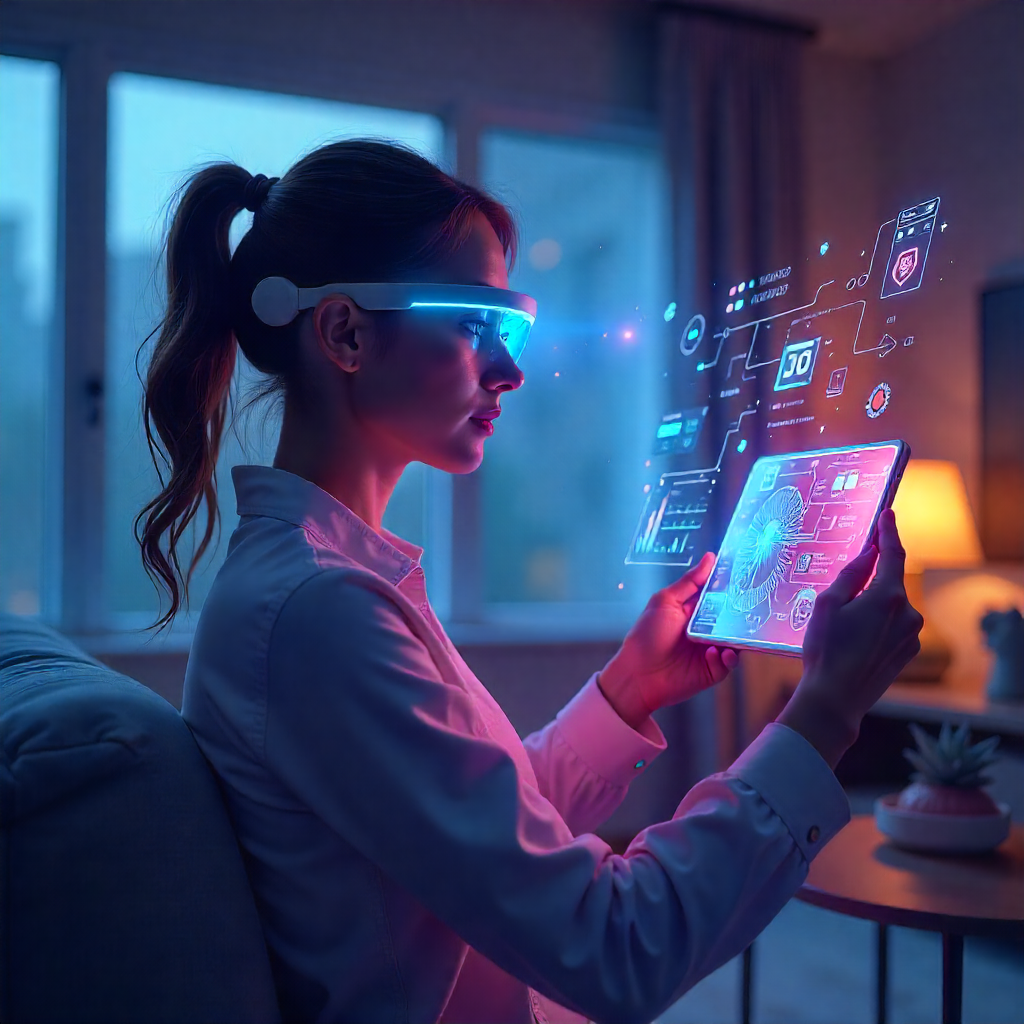
Today, tech giants envision future beyond smartphones as the next major leap in human-computer interaction. For over a decade, the mobile screen has been the center of our digital universe, but the era of “ambient computing” is now arriving. Leading companies are shifting their focus away from handheld hardware toward integrated systems that blend seamlessly into our physical environment, marking the beginning of a world where the internet is something we live within, rather than something we hold.
1. Why Tech Giants Envision Future Beyond Smartphones Now
The plateau of mobile hardware is the primary reason why tech giants envision future beyond smartphones so aggressively in 2025. While mobile phones have become incredibly powerful, their form factor has reached a physical limit.
-
Innovation Fatigue: Yearly updates are now incremental (better cameras, slightly faster chips) rather than revolutionary.
-
The Desire for “Heads-Up” Computing: There is a massive industry push to move users from looking down at screens to looking up at the world through Augmented Reality (AR).
-
AI Integration: With the rise of Agentic AI, the need for a touch-based interface is being replaced by voice, gesture, and intent-based commands.
2. The Core Technologies Replacing the Smartphone
When tech giants envision future beyond smartphones, they aren’t looking at a single replacement, but a “mesh” of interconnected devices.
Augmented Reality (AR) & AI Glasses
The most direct successor to the screen is the “smart glass” faction. Devices like the Ray-Ban Meta and Apple Vision Pro are early steps toward glasses that overlay digital data onto the physical world.
Proactive AI Assistants
AI is moving from an “app” to an “operating system.” Tech giants are building AI that anticipates needs, such as automatically summarizing a meeting you just walked out of or ordering groceries based on your kitchen sensors.
3. How the “Internet of Senses” Changes Everything
As tech giants envision future beyond smartphones, they are moving toward what experts call the Internet of Senses. This involves:
-
Haptic Clothing: Wearables that provide physical feedback (like a pulse on your wrist for a notification).
-
Neural Interfaces: Early-stage research into brain-computer interfaces (BCIs) that allow for thought-based digital interaction.
-
Spatial Audio: Sound that follows you, creating an immersive digital environment without needing to look at a device.
4. Challenges in the Post-Smartphone World
While the vision is exciting, it brings new hurdles:
-
Privacy: Always-on cameras in AR glasses raise significant social and legal questions.
-
Battery Life: Powering high-performance AR in a lightweight frame remains a major engineering challenge.
-
Digital Inclusion: Ensuring that the “post-smartphone” world doesn’t leave behind those who cannot afford expensive new wearables.
FAQs
Is the smartphone actually going to die?
It won’t disappear overnight, but it will likely become a “processing hub” that stays in your pocket while your glasses or watch handle the actual display and interaction.
Which tech giants are leading this shift?
Meta (AR glasses), Apple (Spatial Computing), Google (Ambient AI), and Amazon (Smart Home ecosystems) are the primary players.
What is “Ambient Computing”?
It is the concept of computers being everywhere around us—in our walls, our glasses, and our cars—responding to our presence and voice without needing a handheld screen.
Conclusion
The fact that tech giants envision future beyond smartphones signals the most significant shift in technology since the original iPhone. By moving away from “head-down” computing toward a seamless, AI-driven digital layer, we are entering an era where technology serves us more naturally. Whether through AR glasses or invisible AI assistants, the future is no longer in the palm of your hand—it is all around you.